


Cinnabon
4.8392.00 Reviews
App Specs
- Version
- 2.6
- Updated On
- License
- Free
- Downloads
- 100,000+
- Developer
- Cinnabon Franchisor SPV LLC
- Categories
- Food & Drink
- Platform
- Android
Screenshots
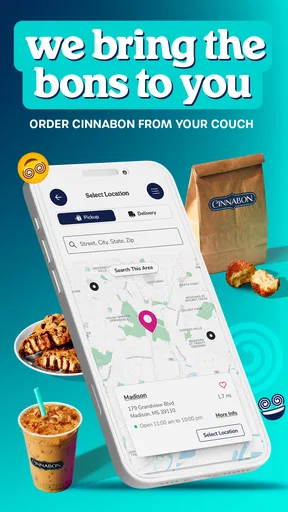
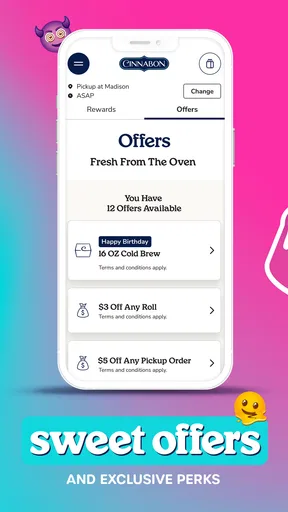
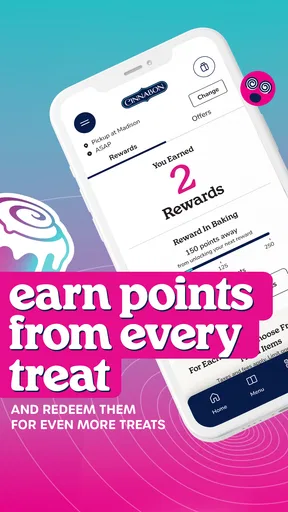
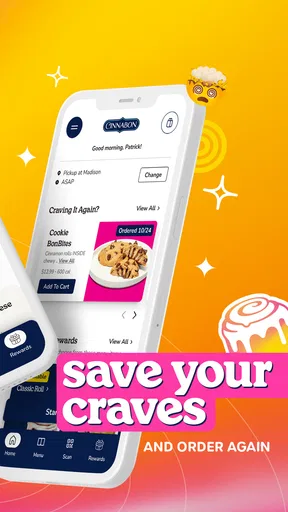
 Analysis by AppCompare
I enjoy Cinnabon most when I am already thinking about a cinnamon roll and want to make the ordering decision quickly. The official Cinnabon app is a free Food & Drink app from Cinnabon Franchisor SPV LLC, built around ordering and earning sweet rewards rather than trying to replace every food-ordering service on a phone. That narrow purpose is also its main appeal: when I want Cinnabon specifically, I would rather use an app focused on that bakery than search through a general delivery platform.
My overall impression is positive, but with an important qualification. This is a companion for Cinnabon customers, not a complete restaurant-discovery tool. It makes the most sense for people who buy from Cinnabon often enough to care about rewards and who prefer placing an order from a dedicated app. If you only visit occasionally, or if you want to compare several nearby restaurants at once, a broader food-ordering alternative may suit you better.
How the app feels in everyday use
I find a dedicated bakery app most useful when it fits into a decision I have already made, rather than asking me to browse for something to eat. Here, the practical question is whether opening Cinnabon’s own app makes an intended visit easier than ordering at the counter or through a broader service. That everyday trade-off also sets up a closer look at what users can actually control.
A focused start instead of a crowded food marketplace
The first thing I appreciate is the app’s clear identity. Its purpose is easy to understand: choose Cinnabon, place an order, and work toward sweet rewards. I do not have to sort through unrelated restaurants, sponsored suggestions, or a long list of cuisines before getting to the bakery I actually want. That focus makes the experience feel lighter than a general delivery app, even though the usefulness depends on whether a Cinnabon location is convenient for me.
The store presentation describes it as an app for ordering and earning rewards, and that matches the way I would use it. I see the ordering side and the loyalty side as connected but distinct. Someone in a hurry can treat it as a direct purchase tool, while a regular customer has a reason to return beyond a single snack. The strongest reason to keep it installed is repeated Cinnabon visits, not occasional browsing.
The app is rated for Everyone, which makes its basic audience broad. That does not mean every person will find it equally useful. A parent ordering a treat, an office worker arranging a quick pickup, or a fan checking in before visiting a mall can all understand the purpose quickly. A user who wants nutrition comparisons, multi-restaurant carts, or flexible restaurant discovery may find the dedicated approach too limited.
What speed means here
For this kind of app, perceived speed is less about complex screens and more about how quickly I can move from opening the app to making a practical choice. A focused brand app has an advantage because it has fewer categories and fewer decisions than a marketplace. I am not expecting a game-like interface or a large social feed; I want the path to an order to stay direct.
Worth Reading Before You Choose

EA SPORTS FC Mobile 26 Is a Bigger Football Game, but It Takes Time

Flipboard Shows What News Apps Must Do Beyond the Feed

Switching to Android Auto Means Rethinking Your Driving Routine

Google Calendar Makes a Crowded Week Easier to Manage

Ludo King Makes the Most of the Minutes Between Plans

Baby Panda World Brings Quick Play to Modern Phones, but Its Game Library Feels Busy
That simplicity can make the app feel responsive in normal use, but the final experience still depends on the ordering process and the selected location. A fast screen is not enough if I have to rethink my order because a store is unavailable or because the timing does not fit my plans. I therefore judge the app in two stages: how quickly it helps me begin, and how confidently it helps me finish.
My practical tip is to open it before I am standing in a crowded food court, rather than waiting until I am already hungry and in a rush. That gives me time to check the available ordering path and decide whether using the dedicated app is more convenient than ordering at the counter. It is a small change, but it avoids turning a simple treat into a last-minute phone task.
A realistic order scenario
Imagine I am leaving work and want to bring Cinnabon home for two people. I would open the app while I still have a few minutes, look for the ordering route that fits the visit, and use the rewards portion if I am eligible to collect value from the purchase. The app is useful here because the decision is already made: I want Cinnabon, not a survey of every nearby restaurant.
In that situation, the dedicated experience can be more comfortable than a general service. I am not paying for convenience with extra browsing. I can think about the order itself, the destination, and whether the selected location makes sense for my route. If the app keeps those choices understandable, it earns its place on my phone.
There is also a useful habit for regular customers: treat rewards as part of the ordering routine rather than something to remember afterward. Before completing a purchase, I would check that I am using the intended account or rewards path. That is not a flashy feature, but it is the kind of workflow detail that prevents a missed opportunity. The app’s value grows when loyalty becomes automatic rather than an occasional afterthought.
When use becomes heavier
The app is likely to feel most demanding when I use it during a busy visit: I may be moving through a mall, switching between a conversation and the phone, or trying to place an order while several people are waiting. In those moments, clarity matters more than decoration. I want the selected location, order details, and next action to be obvious enough that I do not need to start over.
Heavy use can also mean repeated visits rather than one long session. A customer who orders frequently will care about whether returning to the app remains worthwhile, whether the rewards process stays easy to understand, and whether the app continues to feel quicker than simply ordering in person. For that audience, small points of friction become more important than the first impression.
I would not describe this as a tool for elaborate meal planning. Its role is much narrower, and that is healthy. Trying to use it like a complete restaurant-management app would create unrealistic expectations. It is better at supporting a Cinnabon purchase than at helping me compare prices, menus, or delivery conditions across an entire neighborhood.
Stability and recovering from interruptions
Reliability matters because food orders are time-sensitive. If I leave the app briefly to answer a message, move through a weak signal area, or check my route, I want to return without confusion about what I was doing. My preferred approach is to review the order carefully after any interruption instead of assuming that the previous screen still represents the current state.
That recovery habit is especially useful when I am ordering for somebody else. I would confirm the location and order details again before finishing, particularly if I have switched apps or changed plans. It takes only a moment and reduces the chance of sending a treat to the wrong place or misunderstanding the selected ordering option.
I also prefer to keep the app updated through the normal app-store process. The current version is 2.6, and the app was released on May 11, 2021. Those details do not guarantee a perfect experience on every phone, but they make version awareness sensible when troubleshooting. If an action behaves strangely, I would first close and reopen the app, check the connection, and make sure the installed version is current before assuming the problem is permanent.
My recovery advice is simple: do not repeatedly tap a final action when the screen appears slow. Pause, check whether the order changed, and then continue. Repeated taps can create uncertainty, especially when the app is being used in a crowded place or over an inconsistent connection. A calm review of the order is safer than trying to force a response.
Device requirements and practical limits
The app requires iOS 11 or later, so compatibility is an important first check for someone using an older Apple device. That minimum requirement is not especially demanding for many users, but it does exclude phones and tablets that have not moved beyond older system software. Before planning to rely on it for a visit, I would confirm that the device can install and run the current release.
Resource demands are best considered in context. This is a focused ordering app, not a large game or a media-heavy service, so I would expect its main burden to come from ordinary app activity and the connection needed to complete an order. I would not install it solely because I expect it to replace a full restaurant marketplace; I would install it because the dedicated Cinnabon workflow is useful to me.
Storage is another practical consideration for people who keep many shopping, restaurant, and loyalty apps installed. A single brand app may feel unnecessary if I only visit once a year. In that case, using a browser or an existing general food service may be a better way to avoid adding another app to the home screen. For a frequent customer, however, the rewards purpose can justify keeping it available.
The Everyone age rating makes it suitable for a wide household audience, but account handling still deserves ordinary care. If several people share a device, I would check whose rewards account is active before placing an order. That is a particularly useful precaution in a family setting, where a child or partner may open the app after somebody else has used it.
Rewards change the value calculation
The rewards element is what separates this app from simply visiting a Cinnabon counter. I see it as a long-term convenience rather than an instant discount promise. Its value depends on how regularly I buy from the brand and how consistently I complete purchases through the app’s intended flow.
This creates a clear trade-off. A dedicated loyalty app can be rewarding for a committed customer, but it can feel like extra effort for somebody who rarely visits. If my usual Cinnabon stop is spontaneous and I do not want to manage another account or ordering routine, the counter may be faster in real life. If I already plan to order through my phone, using the official app gives the purchase a better chance of contributing to the rewards experience.
I would also avoid assuming that every visit should be routed through the app. If I am already at the bakery and the line is short, ordering directly may be more sensible than taking out my phone. The app is most useful when it reduces a step, preserves a repeat-customer habit, or lets me prepare before arriving. It is not automatically the best option simply because it is official.
How it compares with usual alternatives
Compared with a general food-delivery app, Cinnabon is more focused and potentially less distracting. A marketplace is better when I want to compare restaurants, combine different cuisines, or use one familiar service for many brands. The Cinnabon app is better when the brand choice is already settled and I care about the brand-specific rewards relationship.
Compared with ordering at the counter, the app offers preparation and a more deliberate digital record of the order. The counter wins when I am already inside, have a simple request, or do not want to spend time navigating a phone. The dedicated app wins when I want to make the decision before arriving or when I am trying to build a repeat ordering habit.
Compared with a mobile browser, an installed app can be more convenient for somebody who returns often, especially when the goal is a quick repeat action. The browser may be preferable for a rare visitor who does not want another installation. I would choose based on frequency rather than loyalty to one format: regular Cinnabon customers have a stronger reason to keep the app, while occasional customers may be better served by the lightest available route.
Who should use it and who should skip it
I would recommend it to a Cinnabon regular, someone who often orders ahead, and anyone who wants a direct way to connect purchases with sweet rewards. It is also a reasonable choice for people who dislike browsing a large delivery catalog when they already know exactly what they want.
I would be less enthusiastic for someone who visits rarely, uses an older iPhone that cannot meet the system requirement, or wants one app to handle every restaurant. The same applies to people who prefer face-to-face ordering and do not see value in a dedicated rewards routine. In those cases, the app may occupy space without changing the way they buy anything.
My final performance judgment is favorable but measured. The focused purpose should help the app feel straightforward during ordinary ordering, while the rewards system gives regular customers a reason to return. The main limitations are not about needing a powerful device; they are about relevance, location-dependent ordering choices, and whether a dedicated brand app fits my habits better than a counter or marketplace.
After using it as a Cinnabon companion, I would keep it installed if I visited the brand regularly or wanted to prepare orders before arriving. I would skip it if my visits were rare and spontaneous. For the right customer, the app is a practical shortcut with a loyalty purpose; for everyone else, its narrow focus is exactly why it may not be worth adding.
With a 4.7 average from around 1.4 thousand ratings and over 100 thousand installs, it has clear appeal among its audience. The app is free, which makes trying it low-risk, and its Everyone rating keeps the intended audience broad. Still, those figures do not replace personal fit. My recommendation is to judge it by one question: do I buy Cinnabon often enough that a dedicated ordering and rewards tool would genuinely simplify my routine?
Pros
- Easy to browse classic Cinnabon products and seasonal treats.
- Store information helps users locate nearby bakeries more conveniently.
- Offers a simple way to check available menu items before visiting.
- Clean interface makes the app approachable for casual users.
- Useful for fans who want Cinnabon updates in one place.
Cons
- Availability and features may vary depending on your location.
- Some offers may require account creation or personal details.
- The app may provide limited value if no nearby store participates.
- Promotions can have restrictions
- expiry dates
- or minimum purchases.
- Users may still need to visit a store to complete most orders.
FAQs for Cinnabon
What is the Cinnabon app used for?
The Cinnabon app is designed to help fans discover nearby bakeries, browse available menu items, and find current offers or promotions. Depending on your location, it may also support ordering for pickup or delivery through participating stores. Features can vary by country and restaurant, so checking your local Cinnabon listing is recommended before downloading.
Can I order Cinnabon products directly through the app?
In supported locations, the app may allow you to place an order for pickup or delivery, making it easier to request favorites such as cinnamon rolls, coffee, and other bakery items. However, ordering availability depends on the specific store, local delivery partners, opening hours, and regional app support. Some users may be redirected to an external ordering service.
Does the Cinnabon app offer coupons or rewards?
The app may provide access to special promotions, digital coupons, loyalty benefits, or limited-time offers, although the exact rewards system differs between regions. Some deals may require account registration, location permissions, or a minimum purchase. Before relying on a promotion, read its terms carefully because expiration dates, participating stores, and product restrictions may apply.
Is the Cinnabon app free to download and use?
Yes, the Cinnabon app is generally free to download from the official Android or iOS store. You normally do not pay a separate fee simply to browse the menu, locate stores, or view promotions. Nevertheless, purchases made through the app cost money, and delivery charges, service fees, taxes, or minimum-order requirements may apply depending on your location and selected ordering method.
Does the Cinnabon app work in every country?
Cinnabon app availability and functionality are not identical worldwide. The application may be offered only in selected markets, while certain features—such as store searches, online ordering, loyalty programs, and promotions—can differ by country. If the app does not appear in your local app store or shows limited options, your region may not currently be supported.


